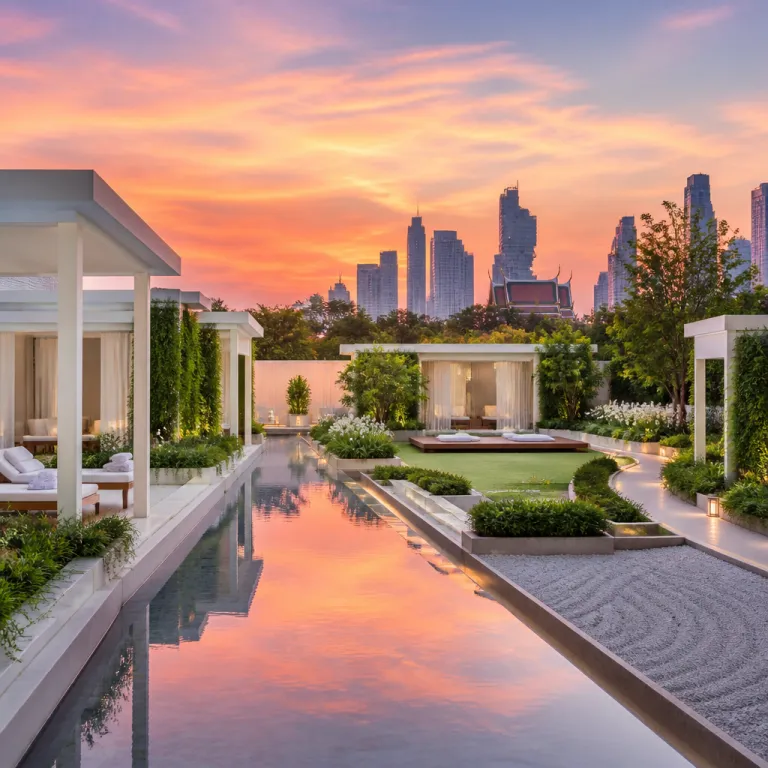
Aman Nai Lert Bangkok urban wellness: a garden retreat in the city
The phrase aman nai lert bangkok urban wellness captures a quiet shift in how travellers experience the Thai capital. In the middle of Bangkok, Aman Nai Lert Bangkok is being developed inside a rare private park that feels more like a discreet estate than a conventional city hotel. This is where the Aman brand translates its resort DNA into an urban sanctuary framed by century old trees and filtered light.
The property, often simply called Aman Nai by regular Aman guests, will occupy part of the historic Nai Lert family grounds, now known as Nai Lert Park. While the city roars a few metres away, the park heritage landscape is designed to soften every edge and turn arrival into a decompression ritual. For business leisure travellers used to glass towers, the contrast between the urban skyline and this low rise garden hotel concept is immediate and deeply calming.
Architect Jean Michel Gathy has been widely associated with the design in early announcements, reportedly working with long sightlines, water, and greenery to make the most of the Nai Lert Park setting. Many planned suites are expected to look directly into the canopy, with floor ceiling proportions and generous windows that pull the park into the room. It is here that the idea of aman nai lert bangkok urban wellness becomes tangible: the city stays present, but softened by filtered views of banyan trunks and koi ponds.
Early materials have suggested the hotel may offer around 50 suites, each designed as a quiet apartment rather than a showpiece, though final numbers can change before opening. Entry level rooms are described as feeling residential, while the Aman Suite adds more square metres, deeper sofas, and a more expansive sense of privacy. For executives extending a stay beyond meetings, that extra floor space and the ability to close the door on Bangkok’s intensity are not luxuries; they are the foundation of recovery.
Location matters for any urban sanctuary, and here Aman Nai Lert Bangkok is precise. The address in Pathumwan places guests within easy reach of embassies, corporate offices, and the city’s major shopping arteries, yet the hotel’s park buffer is intended to keep traffic noise at arm’s length. From Suvarnabhumi International or Don Mueang International Airport on the other side of the city, transfers are straightforward, and the contrast between runway glare and garden shade is part of the experience.
Inside the 1,500 square metre spa wellness complex
The core of this urban wellness retreat is its spa wellness complex, described in press materials as spanning about 1,500 square metres across several floors. This is not a token spa bolted onto a luxury hotel; it is a multi level ecosystem where Thai healing, hydrotherapy, and medically informed therapies sit under one roof. For time poor executives, that vertical integration means you can move from a board call to a full body reset without ever leaving the building.
The Aman Spa anchors the space, with treatment rooms expected to overlook the park and hydrotherapy areas designed for slow, deliberate circuits. Therapists trained in traditional Thai techniques are set to work alongside specialists in contemporary bodywork, creating programmes that move from pressure point foot rituals to targeted deep tissue sessions. Expect classic Thai massage, jet lag recovery treatments, and longer balancing rituals aimed at recalibration after long haul flights and dense meeting schedules in Bangkok, Thailand’s capital.
Alongside the Aman Spa, a dedicated clinic space is planned to bring a medical wellness dimension that many urban hotels still lack. Here, guests should be able to book consultations that address sleep, stress, and performance, then pair them with spa wellness therapies for a more complete approach. Depending on the final operating model, this may include basic diagnostics, lifestyle coaching, or non invasive treatments that complement Aman’s softer rituals and move the property beyond the usual city spa playbook.
Hydrotherapy zones are slated to occupy an entire floor, with vitality pools, saunas, and quiet lounges arranged to encourage unhurried movement. Ceiling height windows frame the Nai Lert Park canopy, so even while you move between heat and cold, the visual anchor remains the garden rather than a tiled wall. For those who measure days in back to back meetings, this kind of spatial generosity feels like a private club rather than a public facility.
Movement studios and a well equipped gym complete the wellness offer, with programming that ranges from gentle stretching to more intensive training. Instructors are expected to weave traditional Thai elements, such as breathing practices and subtle energy work, into otherwise contemporary sessions. Guests who stay several nights can build a rhythm: morning classes, mid afternoon hydrotherapy, and evening Aman Spa rituals that bookend the working day.
Families and multi generational travellers will appreciate that the swimming pool is not an afterthought but a central feature of the park level. The pool terrace looks into the park heritage trees, creating a resort like mood without leaving the city. For more ideas on where a swimming pool is worth booking a room for in Bangkok, including infinity edges and rooftop laps, see this curated guide to Bangkok hotel pools worth booking a room for.
Why wellness centric hotels now define Bangkok’s luxury landscape
The rise of aman nai lert bangkok urban wellness is not an isolated story; it signals a broader shift in how Bangkok positions itself. For years, the city was framed as a gateway to Thai beach resorts, a place to transit through before heading to islands for spa time. Now, properties like Aman Nai Lert Bangkok and Anantara Riverside Bangkok are proving that the city itself can be the retreat.
From a business perspective, wellness centric hotels answer a clear demand from burnout weary travellers who cannot afford week long digital detoxes. Executives flying into Bangkok for regional meetings want a hotel that offers more than a good suite and a strong Wi Fi signal. They want medical style support, spa wellness circuits, and movement options that fit between presentations and client dinners.
In this context, the Aman Suite and other higher category suites at Aman Nai Lert Bangkok become strategic assets rather than just status symbols. Their generous square metres, floor ceiling windows, and quiet layouts allow guests to work, rest, and reset without leaving their room. When combined with the Aman Club style service ethos, where staff anticipate needs with courteous precision, the property competes less with conventional five star hotels and more with private members’ clubs.
Bangkok’s advantage over cities like Singapore and Tokyo lies in its layered hospitality culture. You can leave the calm of Nai Lert Park, step into a waiting car, and be at a street side stall for traditional Thai boat noodles within minutes. That contrast between polished hotel dining and the concierge’s favourite lunch spot is part of the city’s wellness narrative; nourishment here is as much about flavour and context as it is about calories.
For travellers choosing where to base themselves in the city, the decision between riverside calm, Sukhumvit energy, and central business districts can shape the entire stay. A detailed comparison of Sukhumvit versus Riverside versus Silom helps clarify which neighbourhood best matches a wellness focused itinerary. Aman Nai Lert Bangkok quietly sidesteps that debate by offering a park based retreat that still connects quickly to all three zones.
Families extending business trips into leisure will find that wellness centric hotels often handle multi generational needs more gracefully. A parent can slip to the spa or clinic while children swim under supervision, then regroup for relaxed Thai dining in the evening. For more on where luxury and family friendly genuinely meet in the city, consult this insider guide to Bangkok with children in luxury hotels.
How Bangkok competes with Bali, Singapore and Tokyo for urban wellness travellers
When you look at aman nai lert bangkok urban wellness in a regional context, Bangkok’s strategy becomes clearer. Bali still dominates the resort retreat conversation, with jungle hideaways and oceanfront yoga decks, while Singapore and Tokyo lead in clinical efficiency and design led city hotels. Bangkok is carving out a middle path: an urban environment where serious wellness, park heritage, and street level culture coexist within a few square kilometres.
Aman Nai Lert Bangkok leverages this by offering guests a base that feels like a resort yet functions like a city hotel. From the park, you can reach major business addresses, galleries, and shopping districts in a short drive, then retreat to Nai Lert Park for spa wellness and quiet. That ability to toggle between intensity and calm several times a day is something Bali’s remote resorts or Tokyo’s denser districts cannot easily replicate.
The presence of a clinic within the Aman Spa ecosystem also positions Bangkok as a serious player in medical wellness. Travellers who might once have flown to Singapore for check ups or aesthetic treatments can now consider scheduling consultations in the city, then recovering in a suite overlooking Nai Lert greenery. This integration of clinical style care, traditional Thai therapies, and luxury accommodation is a key differentiator in the regional market.
Connectivity from Suvarnabhumi International and Don Mueang International Airport makes short wellness focused stays viable. A guest can land in the morning, check into an Aman Suite by midday, and be in a hydrotherapy circuit or movement class before the afternoon’s first meeting. For regional executives based in Hong Kong or Singapore, that efficiency turns Bangkok into a practical retreat destination rather than a once a year escape.
Beyond Aman, other properties such as Anantara Riverside Bangkok are building their own narratives around detox programmes and multi day regeneration retreats. The common thread is a move away from purely hedonistic city breaks toward stays that leave guests measurably better rested and more focused. In this landscape, aman nai lert bangkok urban wellness stands out for its park based setting and the depth of its spa wellness and medical style offerings.
As more travellers seek urban sanctuaries that balance work and recovery, Bangkok’s mix of price points, cultural richness, and hospitality expertise gives it an edge. The city offers everything from Michelin starred dining to humble street stalls, from rooftop bars to quiet temples, all within easy reach of Nai Lert Park. For discerning guests, that spectrum of experiences is part of the wellness equation: stimulation when you want it, silence when you need it.
A wellness focused stay at Aman Nai Lert Bangkok, day by day
To understand aman nai lert bangkok urban wellness, it helps to map a typical three day stay. Morning begins with soft light filtering through large windows, the park canopy just beyond the glass, and the city still muted. Guests in an Aman Suite or other higher category suites can stretch out across generous square metres before heading down to the spa wellness floor.
Breakfast leans toward light, nutrient focused dishes, with Thai flavours woven into international options. You might choose a rice porridge with traditional Thai condiments one day, then a more Western leaning plate the next, always with fresh fruit and herbal infusions. Dining spaces look out over Nai Lert Park, so even the first coffee of the day feels anchored in greenery rather than asphalt.
Late morning is ideal for a session at the Aman Spa or a consultation at the clinic. A therapist might begin with a foot ritual rooted in Thai techniques, then move into a tailored massage that addresses flight stiffness or desk bound tension. Guests interested in medical wellness can schedule assessments that feed into longer term programmes, using the hotel stay as a reset point rather than a one off indulgence.
Afternoons often blend work and rest, especially for business leisure travellers. Suites function as quiet offices, with floor ceiling proportions and thoughtful acoustics that keep the city at bay while you handle calls. When focus dips, a short break in the hydrotherapy circuit or a few laps in the swimming pool can restore clarity more effectively than another espresso.
Evenings are where Bangkok’s dual identity as a wellness and pleasure city comes into play. You might start with a light dinner in the hotel, where dining menus balance Thai dishes with cleaner, vegetable forward plates, then head out for a brief immersion in the city’s energy. Returning through the gates of Nai Lert Park, the shift from neon to shadowed trees reinforces the sense that you are re entering a private retreat.
Across these days, small details accumulate: the quiet efficiency of staff, the way thoughtful gestures appear just when needed, the ease of transfers to and from the international airports. For many guests, the most telling moment comes at checkout, when the idea of returning to a standard city hotel feels oddly flat. That is when aman nai lert bangkok urban wellness stops being a marketing phrase and becomes a benchmark for how an urban retreat should feel.
FAQ
What amenities does Aman Nai Lert Bangkok offer?
What amenities does Aman Nai Lert Bangkok offer? Luxury suites, spa, wellness center, dining venues. In practice, current plans indicate around 50 suites including the Aman Suite, a spa wellness complex of roughly 1,500 square metres with the Aman Spa and a dedicated clinic, a swimming pool set within Nai Lert Park, and several dining spaces overlooking the garden. Guests are also expected to benefit from attentive Aman Club style service and convenient access to central Bangkok.
Where is Aman Nai Lert Bangkok located?
Where is Aman Nai Lert Bangkok located? In Nai Lert Park, Pathumwan district, Bangkok. The address places the hotel within a historic park heritage estate, a short drive from major business districts, shopping centres, and cultural sites across the Thai capital. Transfers from Suvarnabhumi International and Don Mueang International Airport are straightforward, making it practical for short wellness focused stays.
Who designed Aman Nai Lert Bangkok?
Who designed Aman Nai Lert Bangkok? Architect Jean-Michel Gathy has been publicly linked to the project in early reports. His approach at this property reportedly emphasises long views into Nai Lert Park, generous windows, and floor ceiling proportions that create a calm, residential feel. The design supports the overall aman nai lert bangkok urban wellness concept by blurring boundaries between interior spaces and the surrounding garden.
What makes Aman Nai Lert Bangkok unique?
What makes Aman Nai Lert Bangkok unique? Urban sanctuary blending luxury with nature. The combination of a central Bangkok location, a rare private park setting, a substantial spa wellness complex, and on site medical style services through a clinic space sets it apart from other city hotels. For guests, this means they can treat the property as both a business base and a genuine retreat.
When did Aman Nai Lert Bangkok open?
When did Aman Nai Lert Bangkok open? Official timelines have shifted over the years, and prospective guests should check the latest information with Aman directly or via recent press releases before planning a stay. What is clear is that the property is positioned as a new reference point for urban wellness in Bangkok, influencing how other luxury hotels think about integrating spa wellness, medical style care, and park heritage into their offerings.